
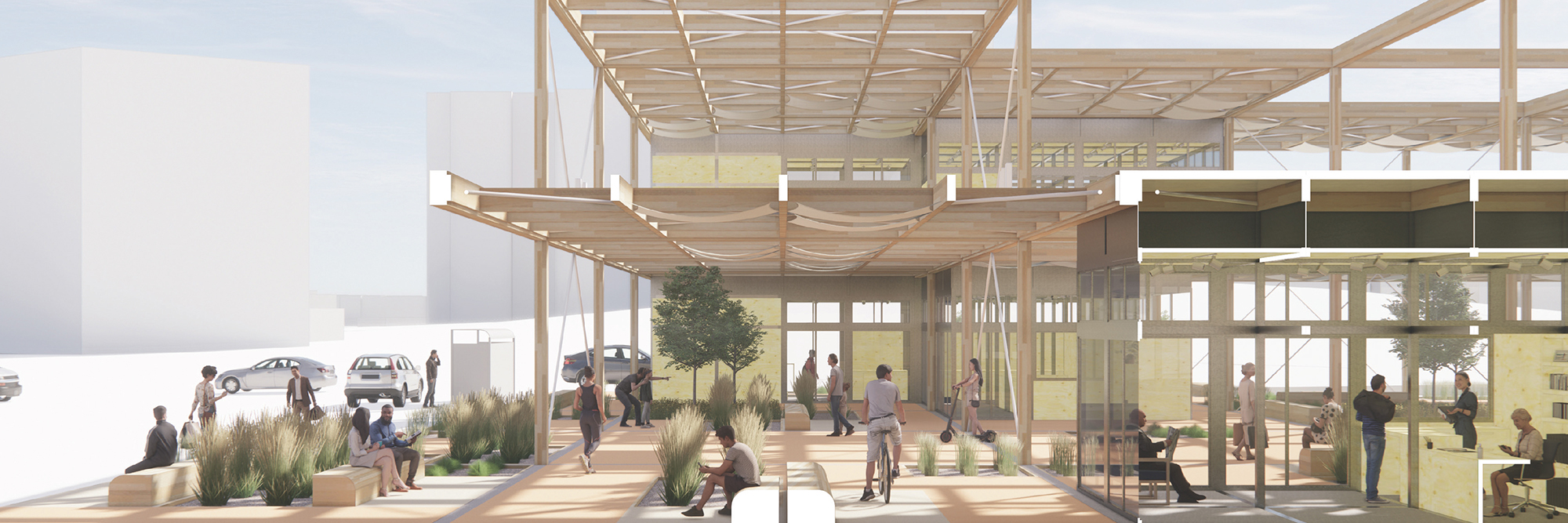
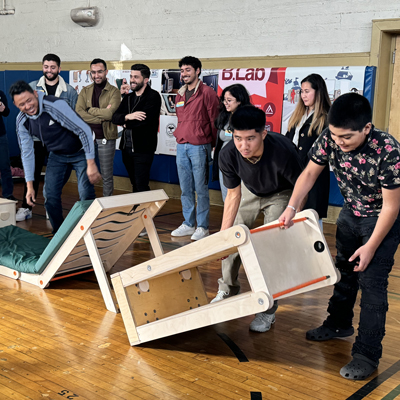
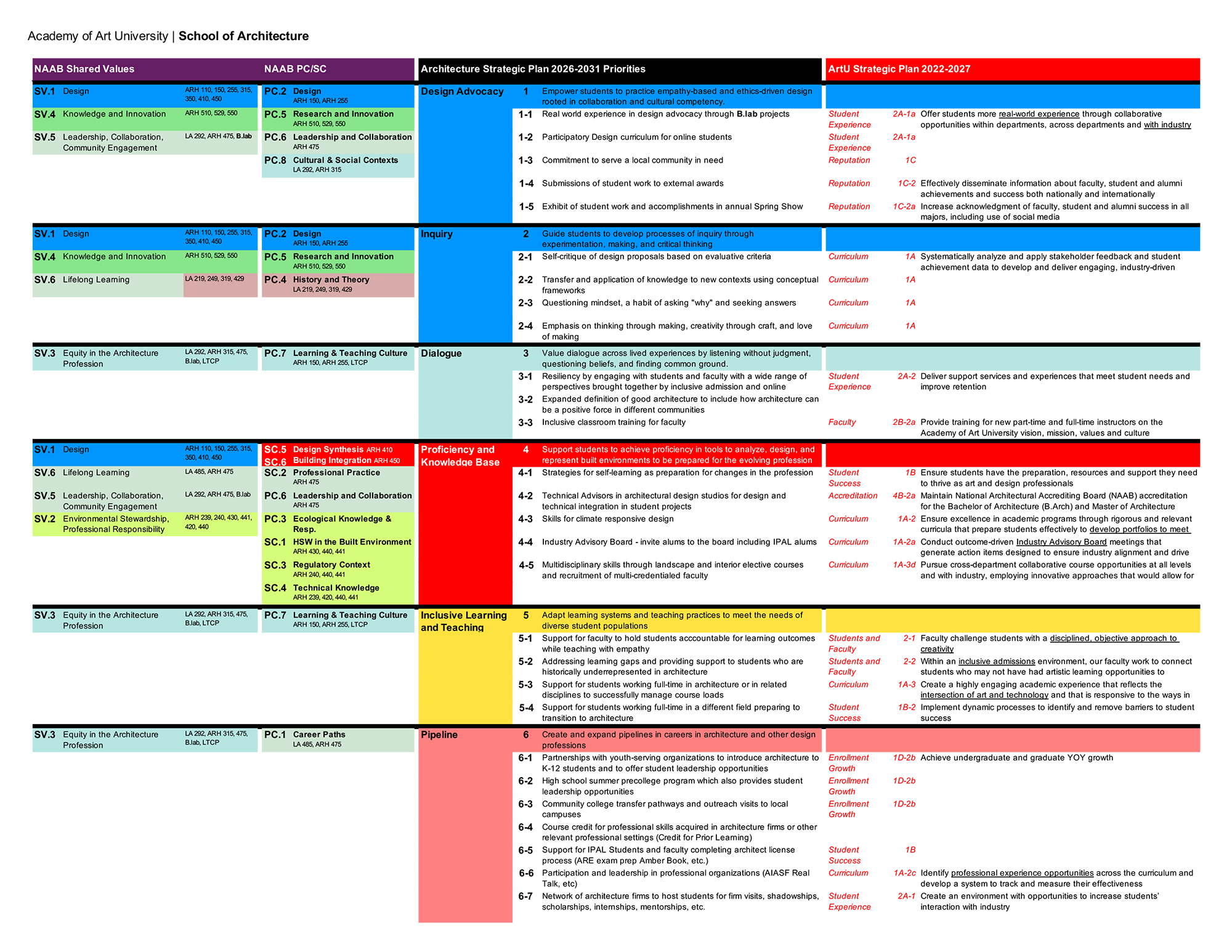
Empower students to practice empathy-based and ethics-driven design rooted in collaboration and cultural competency
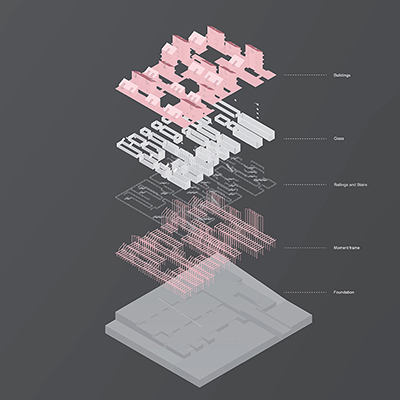
Guide students to develop processes of inquiry through experimentation, making, and critical thinking

Value dialogue with those who bring different lived experiences by listening without judgment, questioning previously held beliefs, and finding common ground
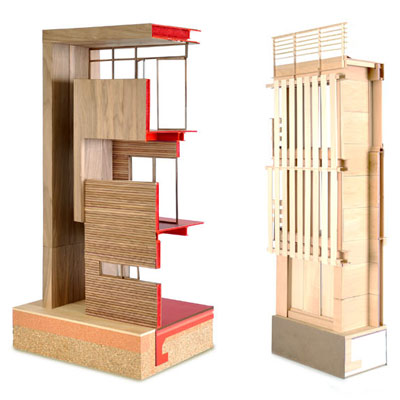
Support students to achieve proficiency in tools to analyze, design, and represent built environments to be prepared for the evolving profession

Adapt learning systems and teaching practices to meet the needs of diverse student populations
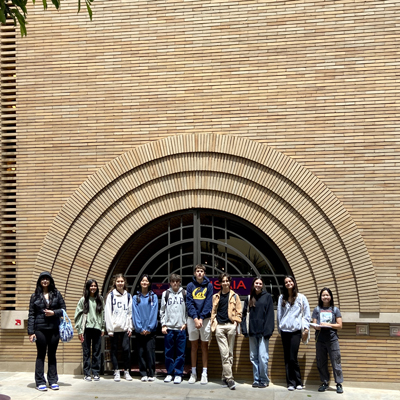
Create and expand pipelines to careers in architecture and other design professions
Empower students to practice empathy-based and ethics-driven design rooted in collaboration and cultural competency
1-1 Real world experience in design advocacy through B.lab projects
1-2 Participatory Design curriculum for online students
1-3 Commitment to serve a local community in need
1-4 Submissions of student work to external awards (AIA California Urban Design Award, AIASF Leadership Award, SHLTR Competition, ACSA Conference Presentation, etc.)
1-5 Exhibit of student work and accomplishments in annual Spring Show
Shared Value 1 Design: Architects design better, safer, more equitable, resilient, and sustainable built environments. Design thinking and integrated design solutions are hallmarks of architecture education, the discipline, and the profession.
Shared Value 4 Knowledge and Innovation: Architects create and disseminate knowledge focused on design and the built environment in response to ever-changing conditions. New knowledge advances architecture as a cultural force, drives innovation, and prompts the continuous improvement of the discipline.
Shared Value 5 Leadership, Collaboration, and Community Engagement: Architects practice design as a collaborative, inclusive, creative, and empathetic enterprise with other disciplines, the communities we serve, and the clients for whom we work.
Guide students to develop processes of inquiry through experimentation, making, and critical thinking
2-1 Self-critique of design proposals based on evaluative criteria
2-2 Transfer and application of knowledge to new contexts using conceptual frameworks
2-3 Questioning mindset, a habit of asking “why” and seeking answers
2-4 Emphasis on thinking through making, creativity through craft, and love of making
Relevant to Program Learning Outcomes
Shared Value 1 Design
Shared Value 4 Knowledge and Innovation: Architects create and disseminate knowledge focused on design and the built environment in response to ever-changing conditions. New knowledge advances architecture as a cultural force, drives innovation, and prompts the continuous improvement of the discipline.
Shared Value 6 Lifelong Learning: Architects value educational breadth and depth, including a thorough understanding of the discipline’s body of knowledge, histories and theories, and architecture’s role in cultural, social, environmental, economic, and built contexts. The practice of architecture demands lifelong learning, which is a shared responsibility between academic and practice settings.
Value dialogue across lived experiences by listening without judgment, questioning beliefs, and finding common ground.
3-1 Resiliency by engaging with students and faculty with a wide range of perspectives brought together by inclusive admission and online modality
3-2 Expanded definition of good architecture to include how architecture can be a positive force in different communities
3-3 Inclusive classroom training for faculty
Shared Value 3 Equity in the Architecture Profession: Architects commit to fostering equitable opportunities and access for all in the profession, avoiding discrimination, and showing respect for the differences in the people and contexts we serve, in the environments we design, the words we speak, the actions we take, and the respectful learning, teaching, and working environments we create in the profession and in society. This includes support for a range of pathways for students seeking access to an architecture education.
Support students to achieve proficiency in tools to analyze, design, and represent built environments to be prepared for the evolving profession
4-1 Strategies for self-learning as preparation for changes in the profession
4-2 Technical Advisors in architectural design studios for design and technical integration in student projects
4-3 Skills for climate responsive design
4-4 Industry Advisory Board – invite alums to the board including IPAL alums
4-5 Multidisciplinary skills through landscape and interior elective courses and recruitment of multi-credentialed faculty
Shared Value 1 Design
Shared Value 2 Environmental Stewardship and Professional Responsibility
Shared Value 5 Leadership, Collaboration, and Community Engagement
Shared Value 6 Lifelong Learning
Adapt learning systems and teaching practices to meet the needs of diverse student populations
5-1 Support for faculty to hold students acccountable for learning outcomes while teaching with empathy
5-2 Addressing learning gaps and providing support to students who are historically underrepresented in architecture (Student Success Coach)
5-3 Support for students working full-time in architecture or in related disciplines to successfully manage course loads
5-4 Support for students working full-time in a different field preparing to transition to architecture
Shared Value 3 Equity in the Architecture Profession: Architects commit to fostering equitable opportunities and access for all in the profession, avoiding discrimination, and showing respect for the differences in the people and contexts we serve, in the environments we design, the words we speak, the actions we take, and the respectful learning, teaching, and working environments we create in the profession and in society. This includes support for a range of pathways for students seeking access to an architecture education.
Create and expand pipelines in careers in architecture and other design professions
6-1 Partnerships with youth-serving organizations to introduce architecture to K-12 students and to offer student leadership opportunities (SFUSD, AIASF Youth Design Festival, SFNOMA Project Pipeline, YAX, Engineers Alliance for the Arts, etc.)
6-2 High school summer precollege program which also provides student leadership opportunities
6-3 Community college transfer pathways and outreach visits to local campuses
6-4 Course credit for professional skills acquired in architecture firms or in other relevant professional settings (Credit for Prior Learning)
6-5 Support for IPAL Students and faculty completing architect license process (ARE exam prep Amber Book, etc.)
6-6 Participation and leadership in professional organizations (AIASF Real Talk, etc)
6-7 Network of architecture firms to host students for firm visits, shadowships, scholarships, internships, mentorships, etc.
Shared Value 3 Equity in the Architecture Profession: Architects commit to fostering equitable opportunities and access for all in the profession, avoiding discrimination, and showing respect for the differences in the people and contexts we serve, in the environments we design, the words we speak, the actions we take, and the respectful learning, teaching, and working environments we create in the profession and in society. This includes support for a range of pathways for students seeking access to an architecture education.
Undergraduate architecture BFA program launched
Strategic Plan adopted for B.Arch
Strategic Plan Retreat attended by faculty and student representatives
Faculty Retreat to review and update Strategic Plan
Visioning Session with Faculty, Alumni Survey, Practitioner Survey (meeting notes, Conceptboard link, alumni survey summary)
Strategic Plan Session with Faculty (meeting notes, Conceptboard link)