The Academy of Art is an open enrollment university which means that most students will have the opportunity to study with us. We do not apply minimum GPA or completion of math courses as screening criteria for admission into the Architecture program. However, Architecture is a demanding major, and our NAAB-accredited B.Arch program is very rigorous. So, we provide individualized support for students who need it. Students receive support from a team of advisors and, most importantly, from our faculty who care deeply about each student’s progress.
- Application: Submit an online application
- Personal Statement: Please provide a detailed statement regarding your interest in transferring. Tell us about yourself. How would someone who knows you well describe you? What or who influenced your decision to study architecture? What do you love about architecture? What are your goals? If you plan to be an online student, please tell us why the online mode of learning is the best choice for you.
- Transcripts: Provide transcripts from all colleges previously attended. Note: international transcripts must be evaluated by an approved credential evaluation agency – please contact your admissions representative for a list.
- Resume (optional): Please describe your educational background, work experience, and skill sets. Upload PDF to SlideRoom.
- Portfolio: Required if requesting advanced placement in architecture design studio. Please see Portfolio Guidelines. Upload PDF to SlideRoom.
- Transfer Credit Request Form: Required if requesting transfer credit for architecture courses. Please download Transfer Credit Request Form. Upload completed PDF to SlideRoom.
- Academy of Art University only accepts courses with grades of C or higher for transfer credit.
- Courses must be 3 or more credits to transfer. Courses will be combined where applicable to maximize transfer credits.
- Total transfer credits are determined based on a review of portfolio and transcripts.
- Maximum number of credits that can be transferred into the Bachelor of Architecture (B.Arch) degree is 75 units.
- Maximum number of credits that can be transferred into the Bachelor of Arts (BA) in Architectural Design degree is 60 units.
- Credit for Prior Learning awards credits for skills demonstrated in a portfolio but not acquired through course work.
We conduct a thorough review of your portfolio and transcript(s). Our goal is to match as many of our courses with those you have taken previously. To ensure this goal,
- Please list the course numbers on your portfolio pages so that we can understand in which course the work was created.
- List all software programs used on the portfolio pages – we are looking for Adobe Photoshop, Illustrator, InDesign, Rhino, Revit, Enscape, Twinmotion.
- If you worked in a group, please explain in detail your contribution to the group project.
For architecture design studio placement, please submit for EACH project included in the portfolio:
- Text narrative describing important design decisions (design intent)
- Diagrams visually explaining the project (design concept diagrams can be drawings or models, 2D or 3D)
- Floor plans, sections, elevations, site plans (coordinated set of drawings for the same building)
- Physical models and/or digital models and renderings
- Freehand sketches if applicable
Additionally, please submit the following if applicable to courses you have previously completed:
- Representation of topography in a drawing and/or model
- Site analysis of context, history, climate, etc.
- Program diagrams
- Precedent analysis
- Find course descriptions and learning outcomes on the Undergraduate Courses page
- Find courses offered in upcoming semesters on the university’s Course Catalog
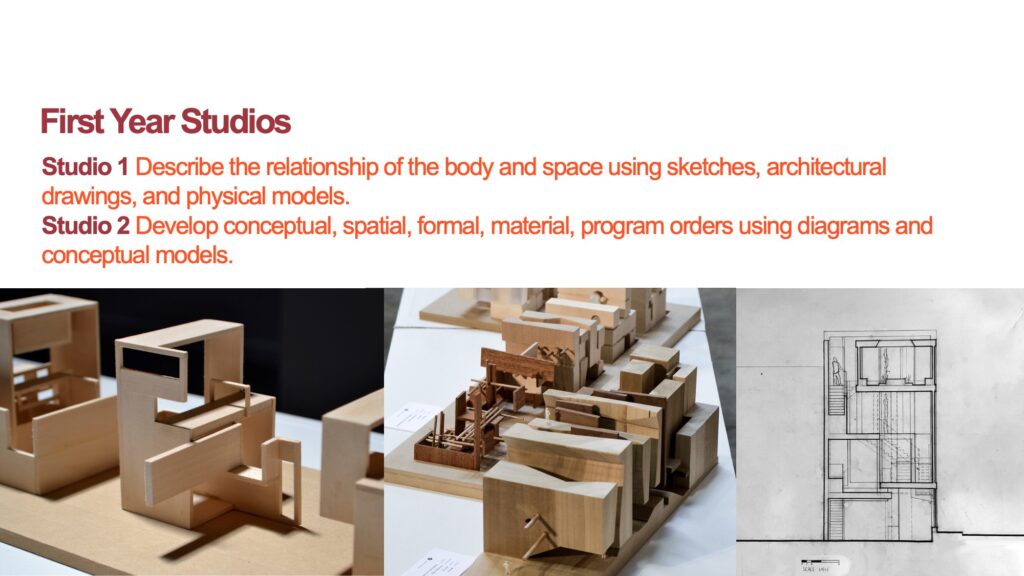
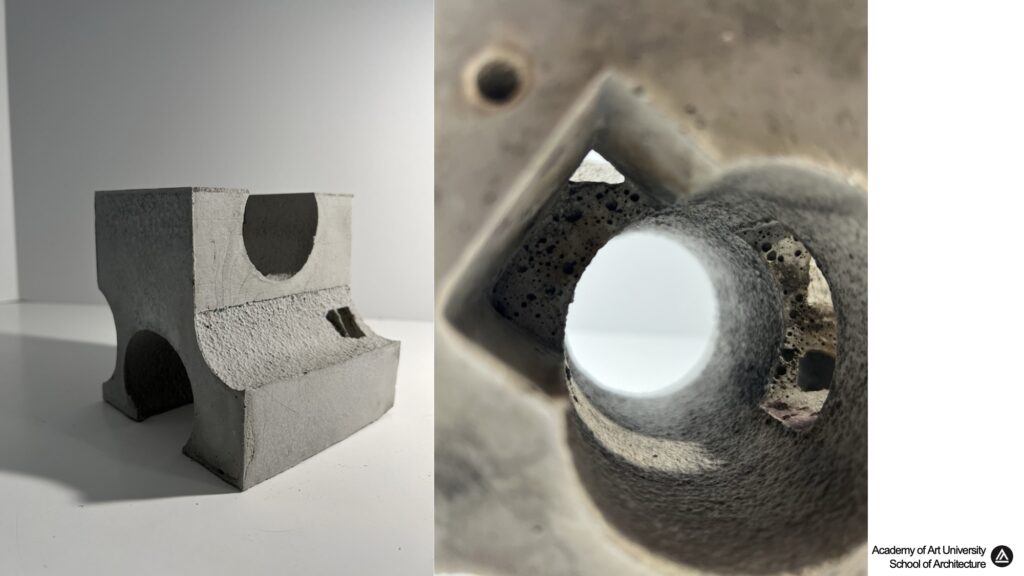
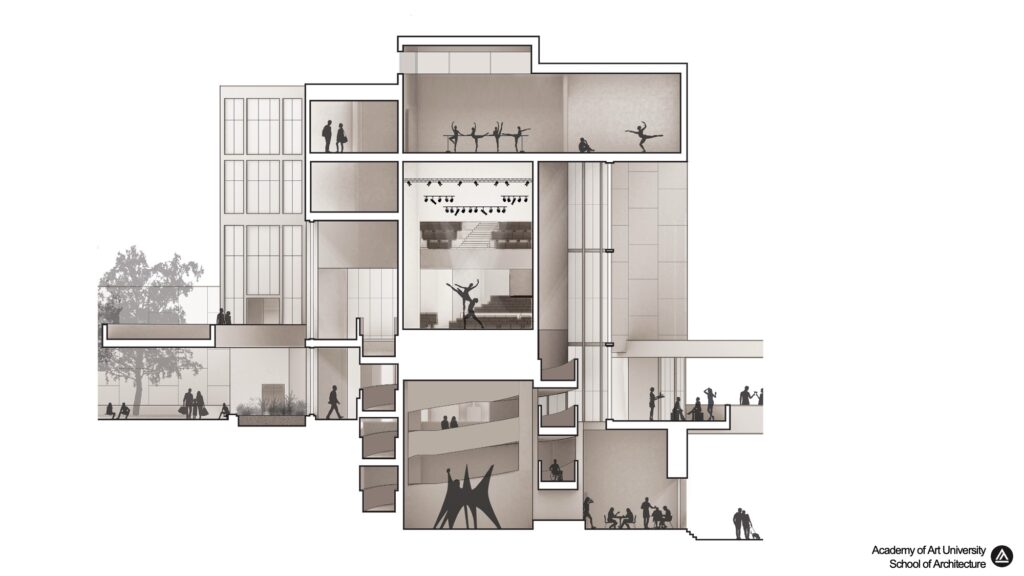
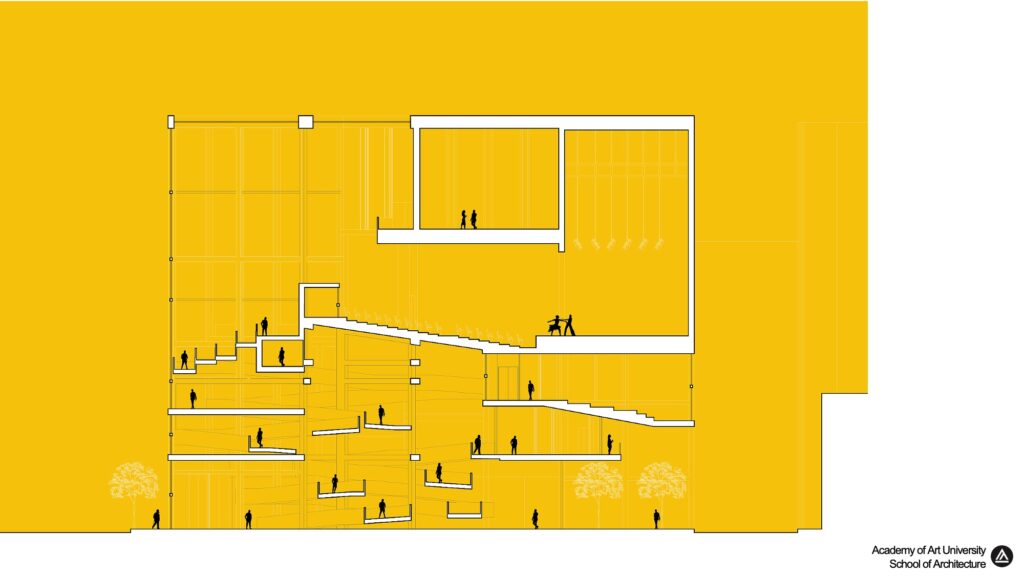
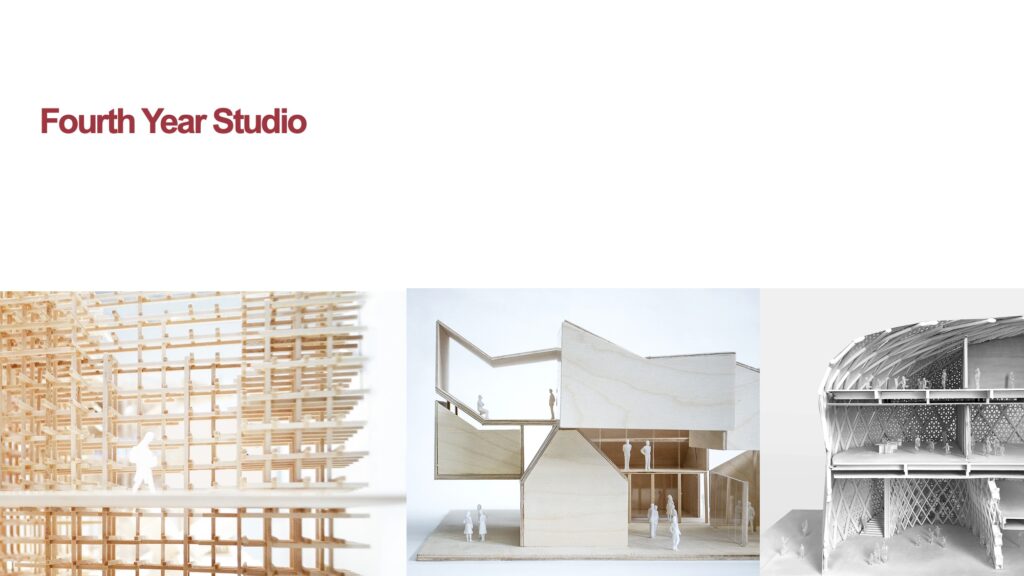
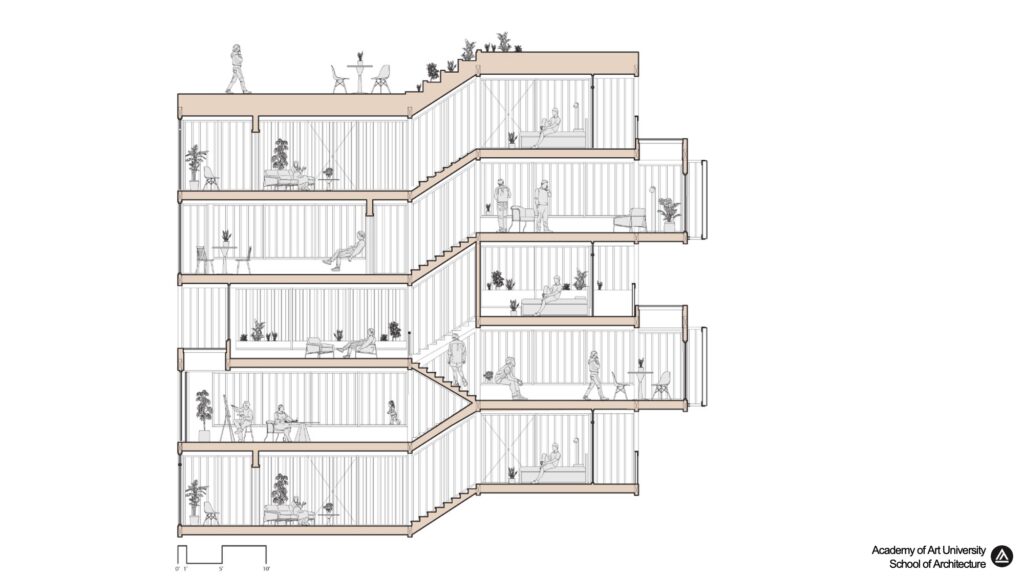
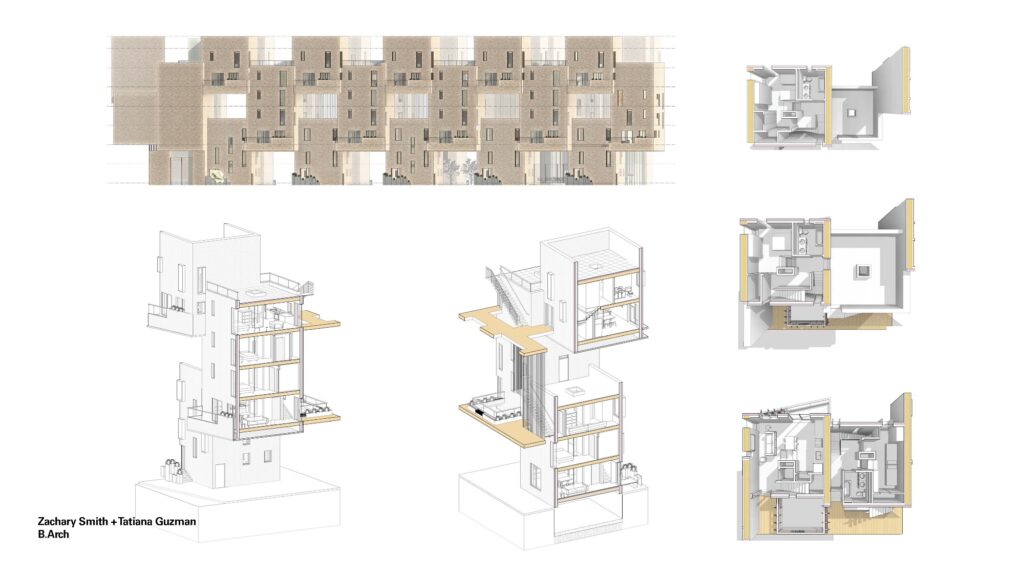
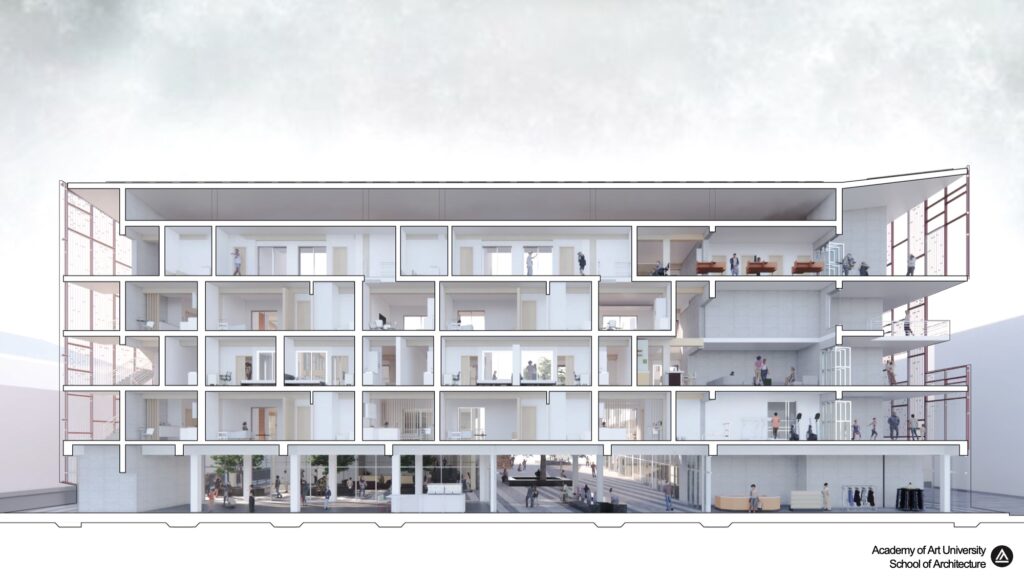
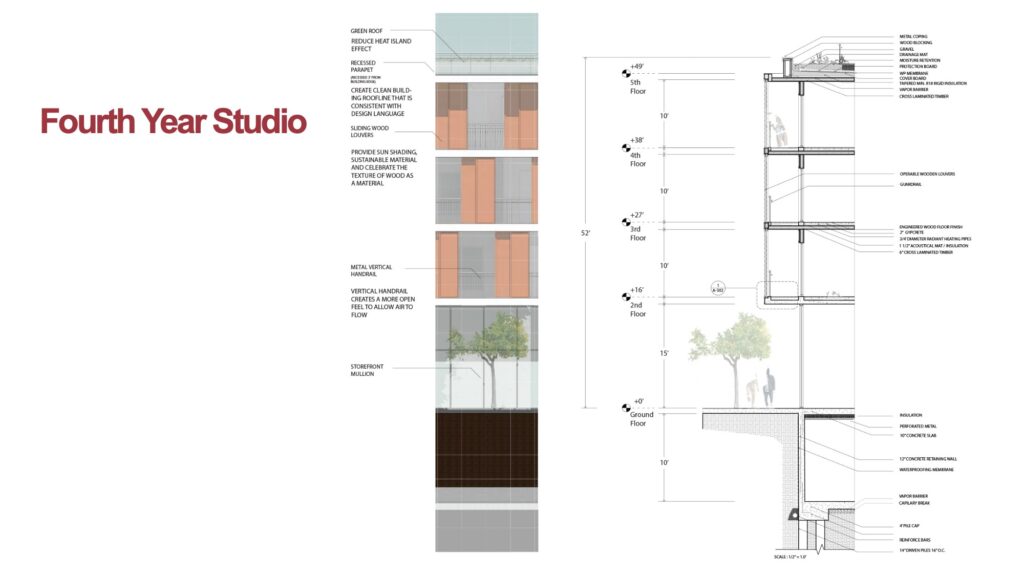
Viewing student work may help you determine equivalency between our courses and courses you have previously taken. The undergraduate courses page includes student work for studio classes. For a quick preview of studio projects, swipe through the images below.







Architecture requires significantly more time than other majors.
- Set realistic goals to avoid having to retake a class
- Student who work full time are advised to take reduced course loads
- Please dedicate about 18 hours each week for 3-credit studio class ARH 110 Studio 1.
- Please dedicate about 36 hours each week for 6-credit studio classes such as ARH 150 Studio 2, ARH 255 Studio 4.
Our Architecture courses are fast-paced so missing more than one week of class will make it challenging to get caught up. It is very difficult to catch up if a student misses class for multiple weeks. If unexpected disruptions arise, students should consider retaking the course in a subsequent semester. Please refer to the Student and Academic Policies for a schedule of tuition refunds.
Our design studio curriculum has a heavy emphasis on process work that explains how and why design decisions were made in a project. This is most commonly shown in the form of diagrams such as concept diagrams, circulation diagrams, site analysis diagrams, etc. Studio placement into our program depends on the quality of process work and the complexity of the project. For example, if you have completed 4 semesters of architectural design studios but lack process work, your placement will not be in our 5th semester studio. This is to ensure that transfer students are successful in our rigorous design studio courses.
For students whose goal is to attain architectural licensure, and are planning to work while in school, we offer the IPAL BArch Program. Architectural licensure requires education, experience, and exams. In a non-IPAL BArch program, students must wait until graduation to take the licensing exams. IPAL BArch students have the advantage of taking the exams before graduation to shorten the time to licensure. Setting architectural licensure as the goal, rather than the graduation date, helps our IPAL BArch students set realistic goals for course loads. We advise our students to focus on maximizing their learning, ensuring the quality of their projects for the portfolio, and being better prepared to successfully transition to the architecture profession.
Here are the states that accept the IPAL path to licensure. Not all states accept IPAL so please check on this interactive page on the NCARB website. https://www.ncarb.org/get-licensed/licensing-requirements-tool
Here are links to information helpful for undergraduate transfer students. Please click on the images.