
Architecture Program Learning Outcomes

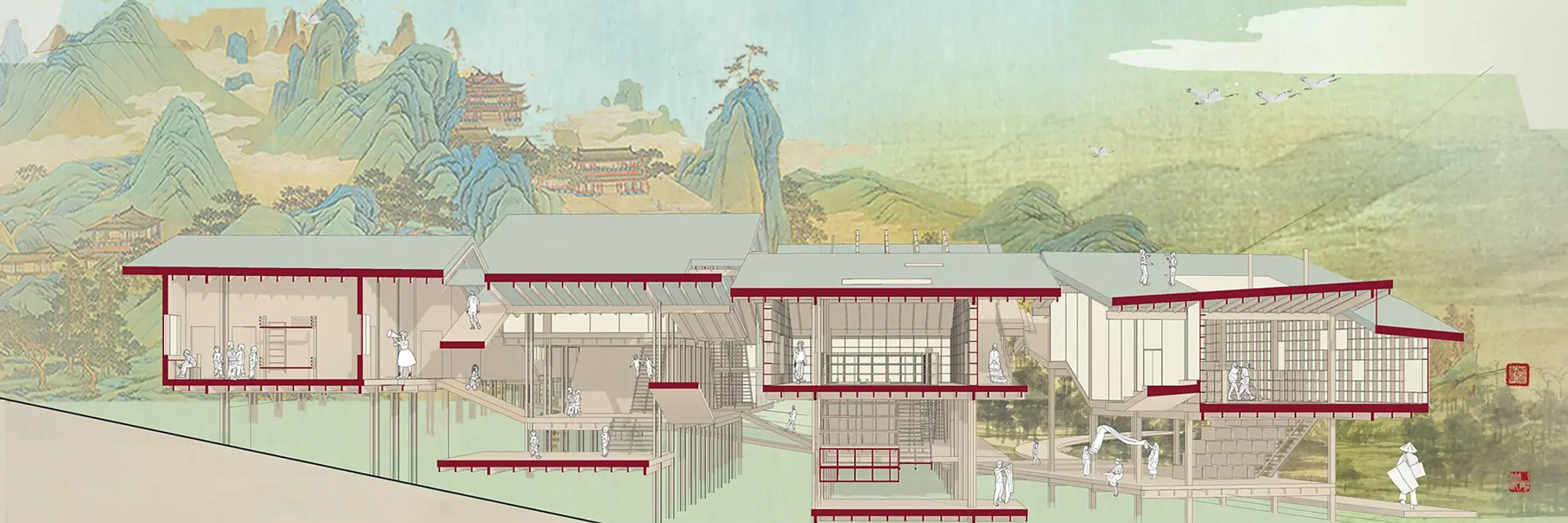
sectional perpective drawing of a school
Architecture Program Learning Outcomes

We prepare students to become inquisitive, creative design professionals who protect people, communities, and the environment. Humility and confidence ground research inquiries and design proposals. Above all, students learn how to learn.

Students will meet the following performance criteria upon completion of each program.

Bachelor of Architecture (B.Arch) 150 units
1. Design Process and Critical Thinking

Develop criteria to evaluate design decisions

  • Use an iterative design process to incorporate feedback and refine proposals
  • Articulate and extend conceptual thinking through diagrams
  • Develop criteria to generate and evaluate organizing principles
  • Communicate critical analyses of precedent buildings and built environments
  • Determine appropriate research and documentation methods to support an architectural thesis
2. Architectural Design

Create architectural proposals to address site and program needs

  • Develop architectural proposals appropriate for site context in scale and program
  • Organize efficient floor plans to meet user and program requirements
  • Produce accurate orthographic, isometric, and perspective drawings to convey design intent
  • Develop fluency in using digital and analog tools in combination for ideation and iteration
  • Construct drawings and models with a high level of craft and attention to detail
3. Presentation

Develop effective and engaging communication strategies

  • Explain and defend design decisions in verbal and written presentations
  • Create visual presentations with logical sequencing, layout composition, and hierarchy of information
4. Leadership and Community

Lead the design of safe, healthy, and equitable built environments in all communities

  • Design for health and well-being of people and communities
  • Promote expanded access to architectural profession by identifying multiple pathways to licensure and developing skills that expand career opportunities
  • Develop cultural competency by valuing different lived experiences
  • Protect life safety and provide equitable access in built environments
5. Environmental Stewardship

Protect ecology and reduce environmental impacts of buildings

  • Evaluate construction materials and systems using design and performance goals
  • Analyze site climate data to determine passive heating and cooling strategies
  • Compare environmental impacts of design options using energy analysis tools
6. Integrated Design

Integrate design, technical, and regulatory requirements using clearly stated design and performance criteria

  • Develop envelope systems and assemblies using clearly stated design and performance criteria
  • Develop structural systems using clearly stated design and performance criteria
  • Evaluate environmental control systems using clearly stated design and performance criteria
  • Incorporate life safety systems in the design of a building
  • Compare building performances of design options using energy modeling tools
Bachelor of Arts (BA) 120 units
1. Design Process and Critical Thinking

Develop criteria to evaluate design decisions

  • Use an iterative design process to incorporate feedback and refine proposals
  • Articulate and extend conceptual thinking through diagrams
  • Develop criteria to generate and evaluate organizing principles
  • Communicate critical analyses of precedent buildings and built environments
2. Architectural Design

Create architectural proposals to address site and program needs

  • Develop architectural proposals appropriate for site context in scale and program
  • Organize efficient floor plans to meet user and program requirements
  • Produce accurate orthographic, isometric, and perspective drawings to convey design intent
  • Develop fluency in using digital and analog tools in combination for ideation and iteration
  • Construct drawings and models with a high level of craft and attention to detail
3. Presentation

Develop effective and engaging communication strategies

  • Explain and defend design decisions in verbal and written presentations
  • Create visual presentations with logical sequencing, layout composition, and hierarchy of information
4. Leadership and Community

Lead the design of safe, healthy, and equitable built environments in all communities

  • Design for health and well-being of people and communities
  • Promote expanded access to architectural profession by identifying multiple pathways to licensure and developing skills that expand career opportunities
  • Develop cultural competency by valuing different lived experiences
  • Protect life safety and provide equitable access in built environments
5. Environmental Stewardship

Protect ecology and reduce environmental impacts of buildings

  • Evaluate construction materials and systems using design and performance goals
  • Analyze site climate data to determine passive heating and cooling strategies
  • Compare environmental impacts of design options using energy analysis tools
Associate of Applied Science (AAS) 60 units
1. Design Process and Critical Thinking

Develop criteria to evaluate design decisions

  • Use an iterative design process to incorporate feedback and refine proposals
  • Articulate and extend conceptual thinking through diagrams
  • Develop criteria to generate and evaluate organizing principles
2. Architectural Design

Create architectural proposals to address site and program needs

  • Develop architectural proposals appropriate for site context in scale and program
  • Organize efficient floor plans to meet user and program requirements
  • Produce accurate orthographic, isometric, and perspective drawings to convey design intent
  • Develop fluency in using digital and analog tools in combination for ideation and iteration
  • Construct drawings and models with a high level of craft and attention to detail
3. Presentation

Develop effective and engaging communication strategies

  • Explain and defend design decisions in verbal and written presentations
  • Create visual presentations with logical sequencing, layout composition, and hierarchy of information